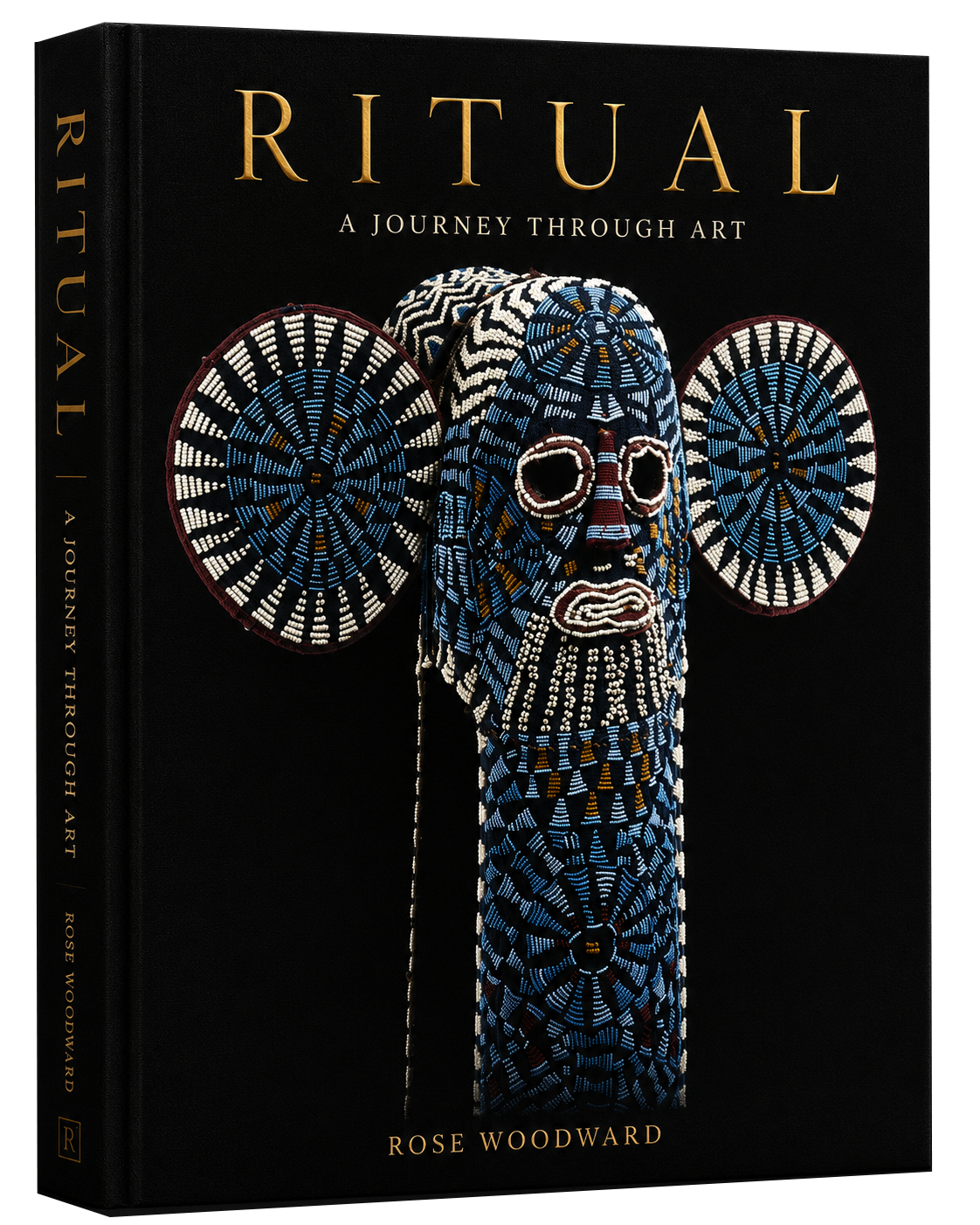
RITUAL
A JOURNEY THROUGH ART
Rose Woodward
From prehistoric burials and sacred objects to masks, offerings, pilgrimage and remembrance, Ritual explores how people across cultures and centuries have used objects, images and ceremony to approach the sacred, mark moments of transformation and give form to belief.
Proposed illustrated volume · c. 400 pages
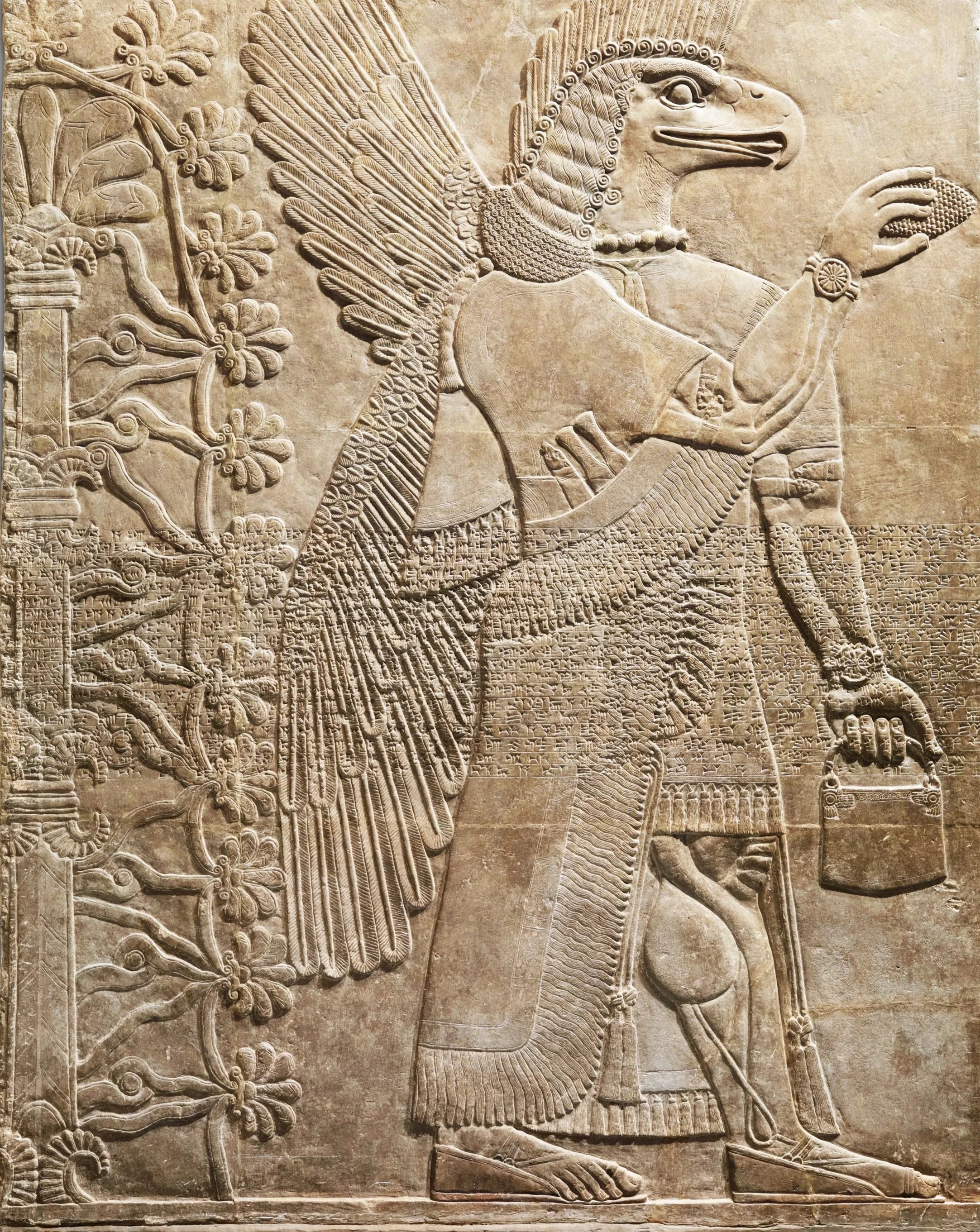
The book unfolds through ten interconnected themes, each exploring a different aspect of ritual through the visual arts. Together, they trace the ways ritual has shaped relationships with the sacred, the body, death, time, identity and power.
-
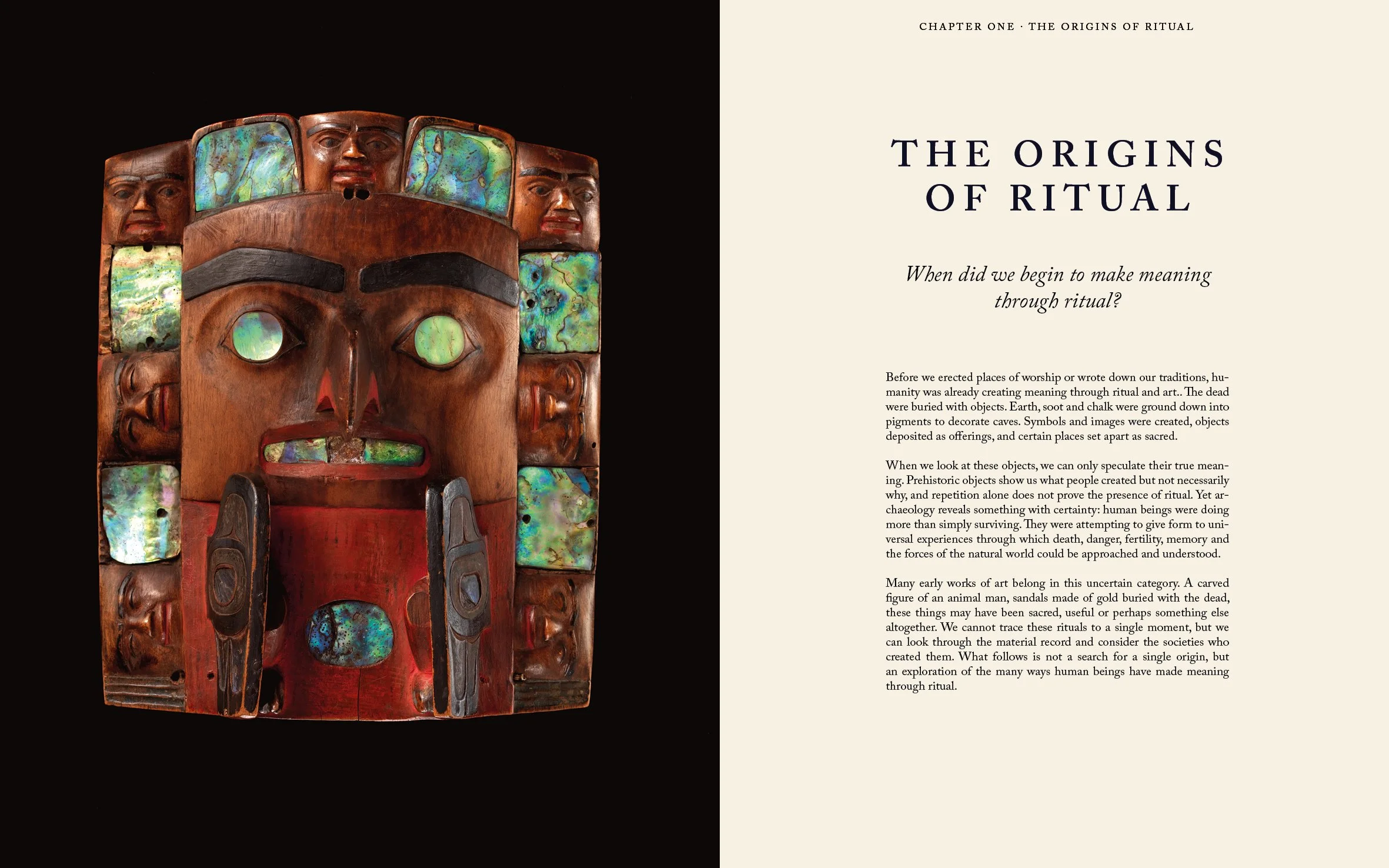
Ritual can be traced through some of the earliest objects and images human beings left behind: grave goods placed with the dead, pigments carried deep into caves, treasures deliberately deposited, and vessels, figures and emblems used in ceremony. Their original meanings are often lost, but the circumstances in which they were made, used or placed can still tell us a great deal. This chapter explores the earliest surviving traces of ritual through the objects themselves, asking what they can reveal about death, memory, identity and humanity’s relationship with the world around it.
-
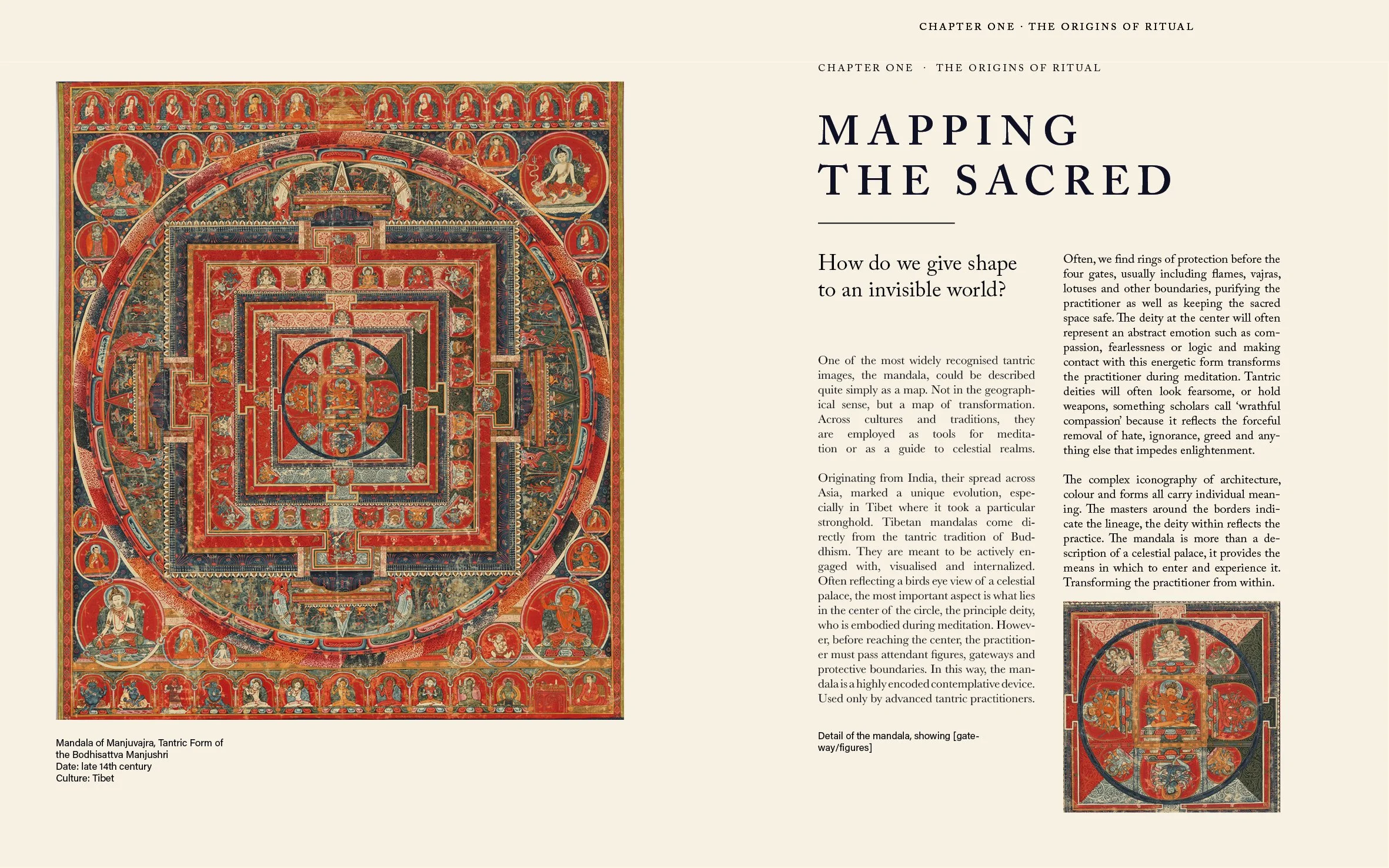
Sacred space can be imagined, marked and understood through objects and images. A mandala can map an ordered universe; a ritual vessel or image can mark a centre; a boundary object can distinguish one area from another. This chapter explores how artworks and ritual objects have been used to give spatial form to cosmological and sacred ideas, creating centres, directions, boundaries and imagined pathways between different realms of experience.
-
Across cultures, ritual has offered ways of approaching beings beyond the ordinary human world. Through images, offerings, prayers and sacred objects, people have sought the presence, protection or favour of gods, ancestors and spirits. This chapter explores the different forms these encounters can take, and how artworks and objects have been used to represent, approach or, in some traditions, make such beings present.
-
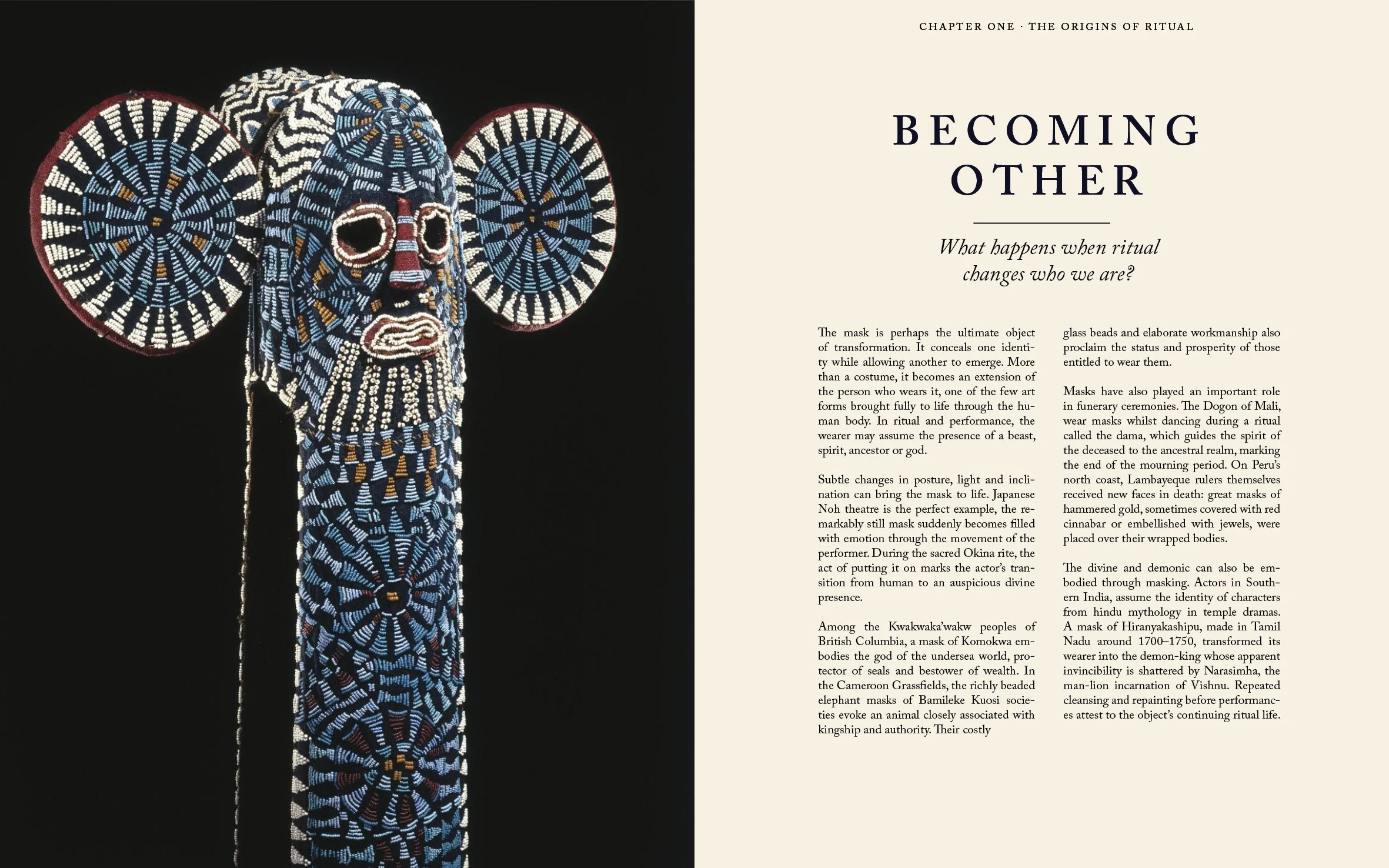
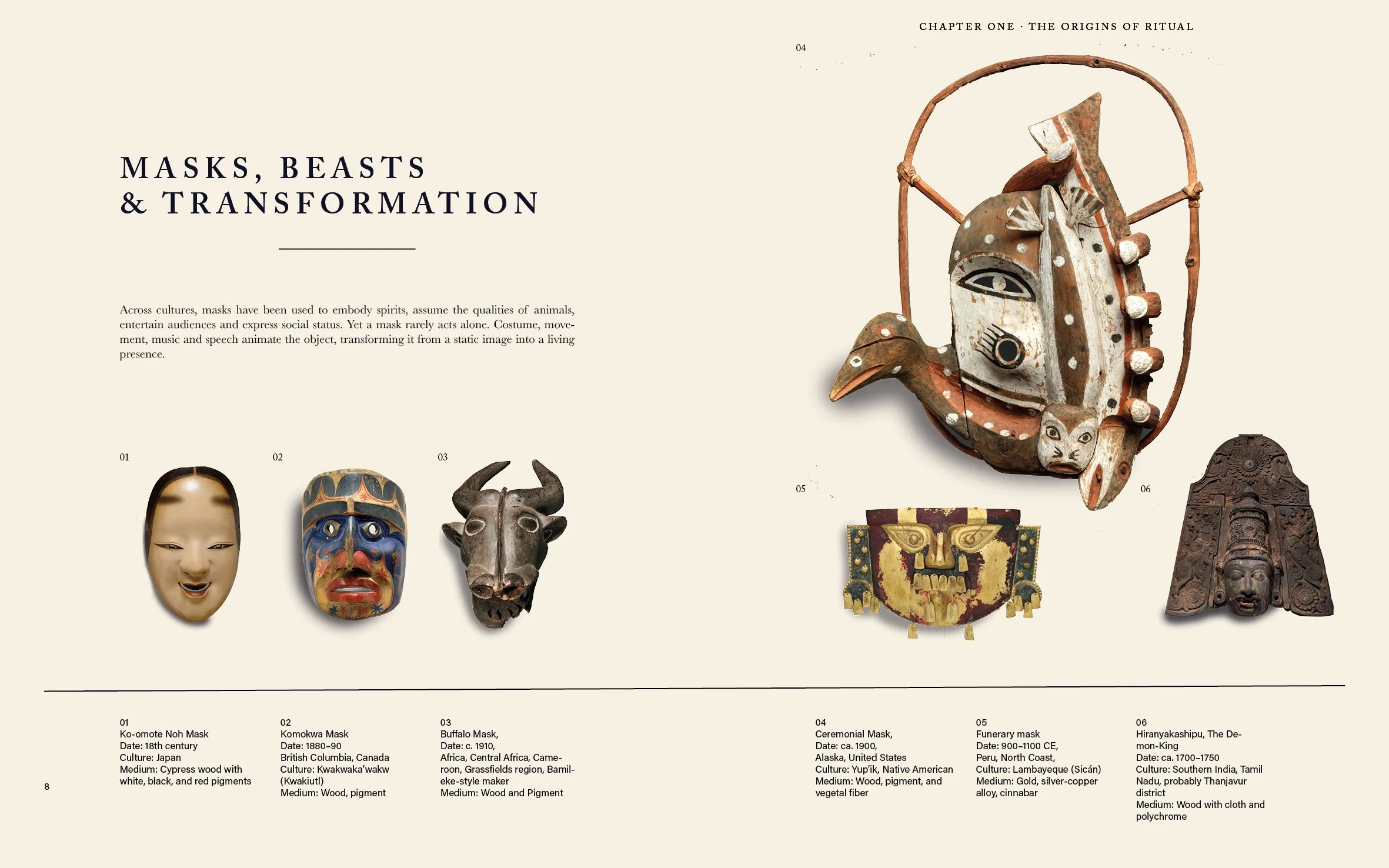
Across cultures, masks have been used to alter appearance, assume ritual identities, embody particular beings and take part in ceremonial performance. Their effect rarely depends on the mask alone: costume, movement, music and speech can transform a static object into part of a living encounter. This chapter explores how masks and related images have been used to express transformation, identity and presence within very different ritual traditions.
-
In many traditions, the human body becomes more than a physical form: it can represent a cosmic order, a sacred identity or a transformed state of being. Paintings and sculptures of divine, ritual or idealised bodies can map the relationship between the individual and a larger spiritual or cosmological world. From images of the cosmic man to figures marked by gesture, dress, ornament and posture, this chapter explores how the body has been used in art to express transformation, sacred identity and states of heightened consciousness.
-
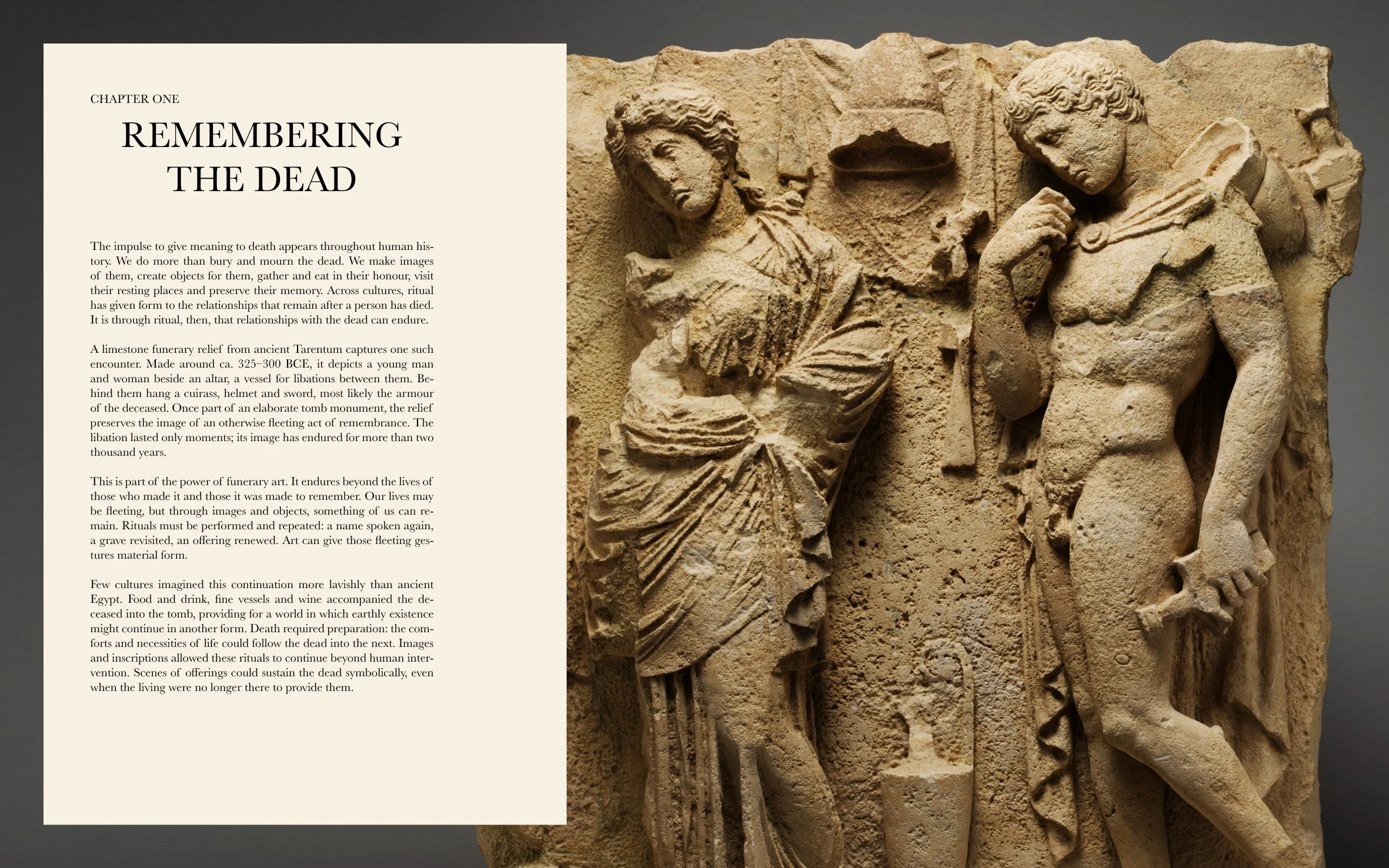
Death does not always bring a relationship to an end. The dead have been remembered through portraits and monuments, sustained with food and offerings, represented through ancestral images and visited at their graves. This chapter explores how funerary art and ritual objects have helped the living remember, honour and maintain relationships with the dead.
-
Seasonal change, agricultural rhythms and celestial cycles have long been represented through art. Paintings, prints, vessels and ceremonial objects can mark moments of renewal, transition and return. This chapter explores how artists and makers have given visible form to recurring time, and how ritual objects can reflect humanity’s relationship with the cycles of nature and the year.
-
Movement is a recurring subject in ritual art. Paintings, reliefs and illustrated manuscripts can show pilgrims, processions and ceremonial journeys in ways that make movement itself part of the story. This chapter explores how artists have represented sacred journeys, thresholds and destinations, and how such images can express devotion, remembrance, status or transformation.
-
Power is often made visible through the objects and images that surround ritual. Crowns, regalia, portraits, commemorative works and ceremonial objects can help construct and communicate authority, while representations of coronations, royal entrances and public ceremonies show power being performed before an audience. This chapter explores how artworks and objects have been used to express legitimacy, status and social order, and to shape the way authority is seen and remembered.
-
Ritual is also present in the ordinary rhythms of life: eating and drinking, washing and dressing, greeting and gathering, tending a home or marking the passing of a day. This chapter looks at the artworks and objects connected with these familiar acts, exploring how repetition, attention and material things can give everyday life a ritual dimension.